Source shock absorber mount for Vehicle, Industrial, and Agricultural Uses
Compare 30 shock absorber mount options from verified Chinese suppliers. Buyers can evaluate materials like EPDM and natural rubber, hardness ratings, and customization availability for vehicle, industrial, and agricultural applications.
Key considerations
Products List


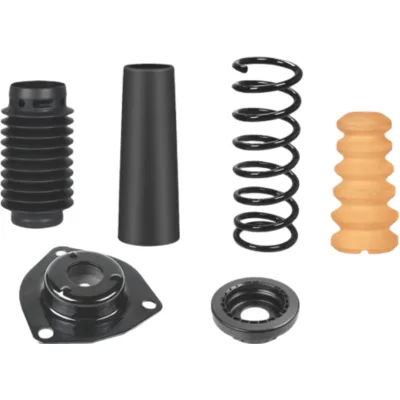


Comprehensive Sourcing Guide
Strategic Sourcing Guide for Shock Absorber Mounts
The global market for shock absorber mounts is characterized by a diverse array of materials, specifications, and application requirements. For procurement professionals, navigating this landscape requires a disciplined approach that distinguishes between generic component descriptions and verified product attributes. The core keyword "shock absorber mount" encompasses a wide spectrum of items, ranging from simple rubber isolators to complex air spring assemblies used in heavy machinery and automotive sectors. This guide synthesizes available product data to provide a framework for evaluating suppliers, verifying technical compliance, and managing procurement risks without relying on unverified market claims.
Technical Specifications and Material Composition
The foundation of any successful procurement strategy for shock absorber mounts lies in a precise understanding of material composition and physical specifications. The supplied data indicates a significant divergence in material choices, with Ethylene Propylene Diene Monomer (EPDM) and Natural Rubber (NR) being the primary options observed in the current catalog. EPDM is frequently cited for its resilience in demanding environments, while NR is highlighted for its specific tensile and elongation properties. Buyers must verify which material aligns with their operational environment, as the choice directly impacts durability and performance.
Physical dimensions are equally critical. Product listings reveal a wide range of diameter specifications, specifically noting ranges from 8 to 150mm, alongside standardized and customized size options. The hardness of these components is a key performance indicator, with observed values falling between 40-60 Shore A and 50-60 Shore A. These variations suggest that a single "one-size-fits-all" approach is insufficient. Procurement teams must request detailed technical drawings or specific model numbers, such as "Standard mount-5" or "3A4001," to ensure the component fits the intended assembly. Furthermore, the surface finish is noted as "Smooth," which is essential for reducing friction and wear in moving assemblies.
| Attribute Category | Observed Data Points | Verification Requirement |
|---|---|---|
| Primary Materials | EPDM, Natural Rubber (NR), Steel (for springs) | Confirm material grade matches application stress. |
| Hardness Range | 40-60 Shore A, 50-60 Shore A | Verify specific durometer for load requirements. |
| Dimensions | Diameter 8-150mm, Standard or Customized | Match exact diameter and mounting profile. |
| Mechanical Properties | Tensile Strength 6-8MPa, Elongation 350% | Validate against dynamic load testing data. |
| Density | 1.4 g/cm³ | Confirm for weight-sensitive applications. |
Compliance, Certification, and Quality Standards
In the B2B sector, certification serves as a proxy for process reliability and product consistency. The observed product data lists several certifications, including CE, ISO9001 (specifically the 2000 version), and ISO9001 combined with TS16949. The presence of TS16949 is particularly significant for automotive applications, as it indicates a quality management system tailored to the automotive supply chain. However, buyers must exercise caution; the mere presence of a certification claim does not guarantee that every unit in a specific batch meets the standard.
The standard for production is often cited as "as per drawing" or "standard size," which places the onus on the buyer to provide precise engineering specifications. In some cases, the standard is defined by functional requirements, such as "Anti vibration." When evaluating a supplier, procurement teams should request valid, current certification documents rather than relying on generic marketing claims. The distinction between "OEM Quality" and "Industrial Grade" also requires clarification. While "OEM Quality" suggests the part meets original equipment manufacturer specifications, "Industrial Grade" implies a focus on durability for heavy-duty use. Buyers must define which quality tier is necessary for their specific use case to avoid over-specifying or under-specifying the component.
Cost Drivers and Pricing Dynamics
Understanding the cost structure of shock absorber mounts is essential for budgeting and negotiation. The observed price range in the market spans from $0.01 to $370 USD, a variance that reflects the immense diversity in product complexity, material volume, and customization levels. A basic rubber isolator may fall at the lower end of this spectrum, while a specialized air spring assembly for a tunnel boring machine or a custom-engineered mount for a specific vehicle model will command a premium price.
Several factors drive these costs. First, the level of customization is a primary determinant. Products listed with "Customized" size or "According to Customer's Requirement" packing typically incur higher unit costs due to the setup and tooling required. Second, the material choice influences price; while natural rubber is common, specialized compounds or the inclusion of steel components (as seen in air springs) increases material costs. Third, certification requirements add a layer of administrative and testing cost. Suppliers holding multiple certifications like ISO9001 and TS16949 often reflect these compliance costs in their pricing. Finally, the Minimum Order Quantity (MOQ) plays a role in unit economics. The observed MOQ range is 1 to 1000 pieces. Buyers ordering small quantities may face higher per-unit costs, whereas bulk orders can leverage economies of scale, though the specific price break tiers are not universally defined in the available data.
Typical Applications and Usage Scenarios
The versatility of shock absorber mounts is evident in the broad range of applications listed. These components are not limited to a single industry but are integral to Household, Electronic, Vehicle, Agricultural, Industrial, and Medical sectors. The data specifically highlights applications in heavy machinery, including Tunnel Boring Machines, Pile Drivers, and Paving Machinery. This suggests that a significant portion of the market is dedicated to construction and mining equipment where vibration damping is critical for operator safety and machine longevity.
In the automotive sector, specific model references such as "ELANTRA CERATO COUPE 09-13" indicate that these mounts are used as direct replacements or OEM components for specific vehicle generations. The position of the mount, such as "Front," is a crucial detail for automotive procurement. Additionally, the classification of the product as a "Motor" or "Fixed or Flexible Fastener Device" in some listings points to their use in stabilizing rotating machinery or securing sensitive electronic equipment. The "Air Spring" type mentioned in the data further expands the application scope to suspension systems requiring variable load support. Buyers must ensure that the supplier understands the specific dynamic loads and environmental conditions of their application, whether it is a medical device requiring sterile, non-vibrating environments or an agricultural vehicle operating in dusty, high-vibration fields.
Supplier Evaluation and Operational Capabilities
Evaluating a supplier for shock absorber mounts requires looking beyond the product listing to their operational capabilities. The origin of the products is listed as Hebei China, Ningbo, Zhejiang, and generally China. While these regions are known for manufacturing, the specific location can impact logistics and lead times. A supplier in Ningbo, a major port city, may offer faster shipping options compared to inland manufacturers.
The customization capability is a key differentiator. The data confirms that customization is "Available," and packing can be "Standard or According to Customer's Requirement." This flexibility is vital for buyers with unique packaging needs or specific engineering requirements. However, the ability to customize must be balanced with the supplier's capacity to maintain quality. The "Simple" installation attribute suggests that the design is user-friendly, but this does not guarantee ease of integration for complex systems. Buyers should assess the supplier's ability to handle "OEM" model requests, as the data shows specific model numbers like "3A4001" and "3A4008" are available. This indicates a capacity for model-specific production rather than just generic stock items.
Quality Control and Long-Term Procurement
Ensuring consistent quality is paramount in long-term procurement. The data mentions specific physical properties such as a tensile strength of 6-8MPa and an elongation of 350%. These are not merely marketing claims but measurable metrics that should be part of the quality control protocol. Buyers should insist on test reports that verify these values for each batch, especially when the application involves safety-critical systems like medical devices or heavy machinery.
The condition of the product is listed as "New," which is a standard expectation, but the "Quality" attribute is described as "Industrial Grade" or "OEM Quality." This distinction requires clear definition in the purchase order. Long-term procurement considerations also include the "Advantage" of "Fast Delivery," which is noted in the data. However, "Fast Delivery" is a relative term and should be quantified in the contract with specific lead times. The "Standard" packing, often described as "Carton" or "Packing in Cartons with Plastic Bag," helps protect the product during transit, but buyers with specific environmental needs may require enhanced packaging.
Finally, the "Condition" of the product and the "Surface" finish being "Smooth" are indicators of manufacturing precision. Over time, wear and tear on these mounts can lead to system failure. Therefore, a robust procurement strategy includes a plan for regular inspection and replacement cycles based on the observed hardness and density. By focusing on these verifiable attributes and avoiding unverified claims, buyers can build a resilient supply chain for shock absorber mounts that meets both immediate operational needs and long-term reliability goals.
FAQs
What materials are used for shock absorber mounts?
Shock absorber mounts are primarily made from EPDM or Natural Rubber. Some assemblies also incorporate steel components for air springs. Buyers must verify the specific material grade to ensure it matches their operational environment and stress requirements.
Which certifications should I look for in suppliers?
Suppliers often hold CE, ISO9001:2000, and TS16949 certifications. TS16949 is particularly significant for automotive applications. Buyers should request valid, current certification documents rather than relying on generic marketing claims to ensure process reliability.
How can I find customized shock absorber mount options?
Customization is available for size and packing requirements. Products can be made to specific drawings or standard sizes like 8 to 150mm diameter. Buyers should provide precise engineering specifications to ensure the component fits the intended assembly correctly.
What is the typical hardness range for these mounts?
Observed hardness values fall between 40-60 Shore A and 50-60 Shore A. These variations suggest a single one-size-fits-all approach is insufficient. Procurement teams must request detailed technical drawings to match the specific durometer for load requirements.
Can I source these mounts for heavy machinery applications?
Yes, these mounts are used in Tunnel Boring Machines, Pile Drivers, and Paving Machinery. They are also suitable for agricultural, industrial, and medical sectors. Buyers must ensure the supplier understands the specific dynamic loads of their application.
What are the standard packaging options for delivery?
Packaging is typically standard cartons or according to customer requirements. Some items are packed in plastic bags and then in cartons. Buyers with specific environmental needs may require enhanced packaging beyond the standard carton protection.